
Codependency: Breaking Emotional Enmeshment and Reclaiming Your Identity
Jun 04, 2026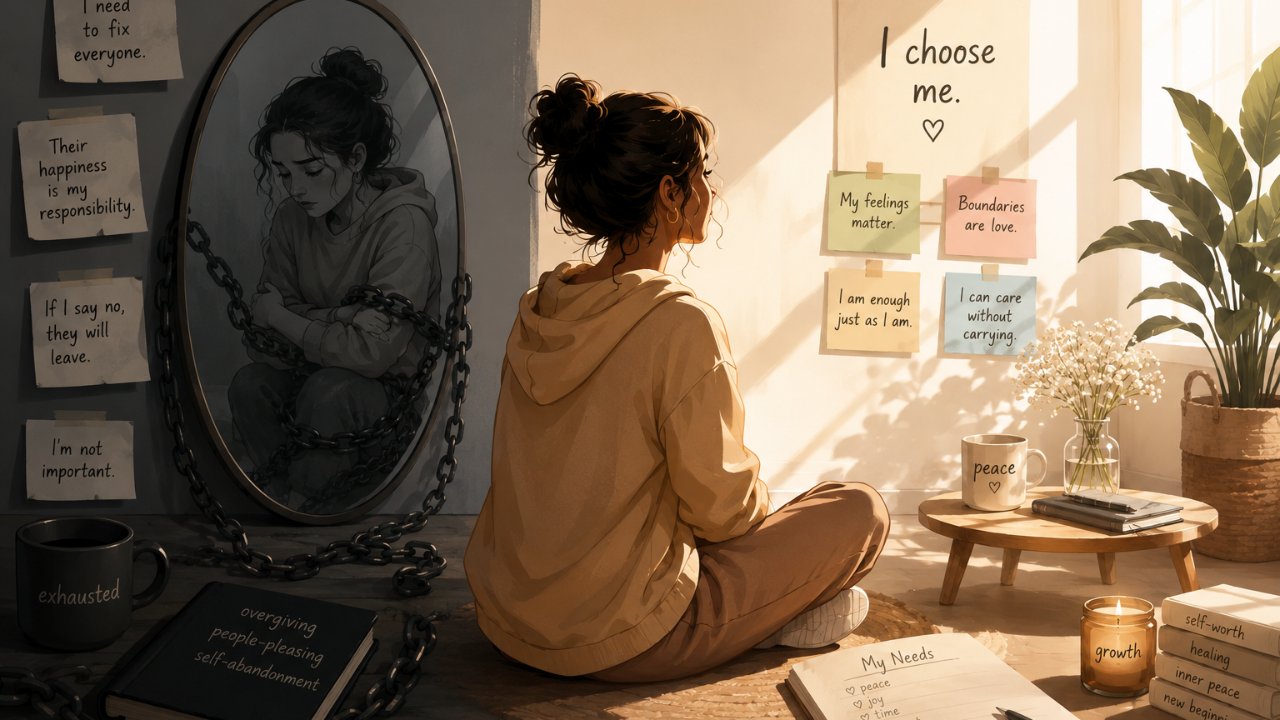
Codependency is often hidden behind what looks like care, loyalty, and love. On the surface, it can appear like being “the strong one,” “the helper,” or “the one who always shows up.” But underneath, it often carries a quiet cost: self-abandonment.
Many women don’t realize they are in codependent patterns until they feel emotionally exhausted, unfulfilled, or stuck in relationships where they are constantly giving but rarely receiving in return.
Healing begins with awareness—not blame. Codependency is not a character flaw; it is a learned emotional survival pattern. And anything learned can be unlearned.
At Life by Design, we support women in recognizing these patterns and rebuilding emotional independence, identity, and healthy connection from the inside out.
What is Codependency?
Codependency is a relational pattern where your sense of self becomes overly dependent on another person’s emotions, needs, approval, or behavior.
Instead of two whole individuals choosing connection, codependency creates emotional fusion—where you begin to feel responsible for managing, fixing, or regulating someone else’s inner world.
This often leads to one person over-functioning while the other under-functions, creating an unhealthy imbalance in the relationship.
Common Signs of Codependency
Codependency does not always look dramatic. In fact, it often hides in everyday behaviors:
- You feel responsible for other people’s emotions
- You struggle to say “no” without guilt
- You over-explain your actions to avoid conflict
- You feel anxious when someone is upset with you
- You prioritize others’ needs above your own consistently
- You stay in relationships that feel emotionally draining
- You confuse being needed with being loved
- You lose your sense of identity inside relationships
If several of these feel familiar, it does not mean something is wrong with you. It means your emotional wiring adapted to environments where love may have felt conditional or inconsistent.
My Personal Experience with Codependency
For me, codependency showed up in the way I saw someone’s potential and believed that if I loved them enough, supported them enough, encouraged them enough, or helped them enough, they would finally become the person I knew they could be.
But somewhere along the way, I lost myself trying to help them find themselves.
I poured my energy into their growth, their healing, their choices, and their future—while slowly neglecting my own needs, peace, and identity. At the time, I thought I was helping. But later, when I began to understand codependency, I realized something powerful: if they truly wanted to step into their potential, they would have taken steps toward it on their own.
That was a hard truth, but it was also a freeing one.
I also had to face the possibility that what I saw as helping may have felt like pressure to them. And instead of appreciating my efforts, they resented them. That realization helped me see that I was carrying a responsibility that was never mine to carry.
The moment I admitted to myself, “I am codependent,” something shifted. It was not shameful—it was freeing. For the first time, I understood that I was only responsible for myself. The only person I can change is me.
And wow… what freedom.
Freedom from carrying someone else’s emotional weight.
Freedom from trying to fix what I did not break.
Freedom from believing someone else’s healing was my assignment. That awareness became the beginning of reclaiming myself.
Why Codependency Develops
Codependent patterns are usually not random—they are learned responses shaped by early emotional experiences.
Some common roots include:
- Growing up in environments where you had to “keep the peace”
- Being rewarded for being helpful, obedient, or emotionally strong
- Emotional neglect or inconsistency in caregiving
- Fear of abandonment or rejection
- Past relationships where love was tied to performance or sacrifice
Over time, you may have learned that your safety or belonging depends on how well you take care of others.
The Hidden Cost of Codependency
While codependency can feel like love or loyalty, it often leads to emotional depletion. 1. Loss of Identity
You become so focused on others that you lose connection with your own needs, desires, and voice.
- Emotional Burnout
Constantly managing others’ emotions leads to exhaustion and resentment. 3. One-Sided Relationships
You give, fix, and accommodate—while your emotional needs go unmet. 4. Fear of Separation
Even unhealthy relationships feel difficult to leave because they are tied to your sense of worth or safety.
- Delayed Personal Growth
Your energy is spent outside of yourself, leaving little space for your own healing and development.
Codependency vs Healthy Interdependence
Healthy relationships are not about independence or dependence—they are about interdependence.
- Codependency: “I am responsible for you, and you are responsible for me.” ● Interdependence: “I care about you, but I am not responsible for your emotional world.”
In healthy connection, both people maintain their identity, boundaries, and emotional responsibility.
How to Start Healing Codependency
Healing does not mean becoming distant or uncaring. It means learning where you end and others begin.
- Reconnect With Yourself
Start asking simple but powerful questions:
- What do I feel right now?
- What do I need?
- What do I want—outside of anyone else’s opinion?
- Practice Emotional Responsibility
Not every emotion you witness is yours to fix or absorb.
You can care without carrying.
- Learn to Sit With Discomfort
Saying “no” may feel uncomfortable at first, especially if you are used to pleasing others. Discomfort is not danger—it is growth.
- Set Small, Consistent Boundaries
You do not need extreme changes. Start with clear, simple boundaries and repeat them consistently.
- Redefine Love
Love is not self-sacrifice. Love is not over-functioning. Love is mutual respect, emotional safety, and balance.
Healthy Boundary Language for Codependency
If you struggle with codependency, boundaries may feel unnatural at first. These phrases can help:
- “I care about you, but I can’t take responsibility for that.”
- “That doesn’t work for me.”
- “I understand, but I need to step back from this.”
- “I trust you to handle this.”
- “I’m not available for that right now.”
You don’t need to over-explain. Clarity is enough.
Reflection Questions
Take time to reflect honestly:
- Where in my life do I feel overly responsible for others?
- Do I feel guilty when I prioritize myself? Why?
- What do I fear would happen if I stopped over-giving?
- Who taught me that my value comes from being needed?
- What parts of myself have I neglected to maintain relationships?
Awareness is the first step toward change.
Final Thoughts: Coming Back to Yourself
Codependency is not about loving too much—it is about losing yourself in the process of loving.
Healing means returning home to yourself. It means learning that your worth is not measured by how much you do for others, but by who you are when you are fully aligned with yourself.
You are allowed to care deeply without abandoning yourself.
You are allowed to love without over-giving.
And you are allowed to choose yourself—without guilt.
